
The Federal Investigation Agency (FIA) plays a vital role in maintaining law and order, combating crime, and ensuring national security. To select capable candidates, FIA conducts both physical and medical tests, especially for uniform posts. Understanding these requirements is essential for anyone preparing to apply.
This guide breaks down the FIA physical test for uniform and non-uniform posts in a clear, practical, and easy-to-follow way.
FIA Recruitment Tests
FIA recruitment typically includes:
- Written examination
- Physical test (for uniform posts only)
- Medical examination
- Interview
Not all candidates go through the same process. The physical test is mandatory only for uniform posts, while non-uniform positions focus mainly on medical fitness.
Uniform Posts in FIA
Uniform posts require candidates to meet both physical performance standards and medical criteria. These roles are more field-oriented and demand physical endurance.
Common Uniform Positions
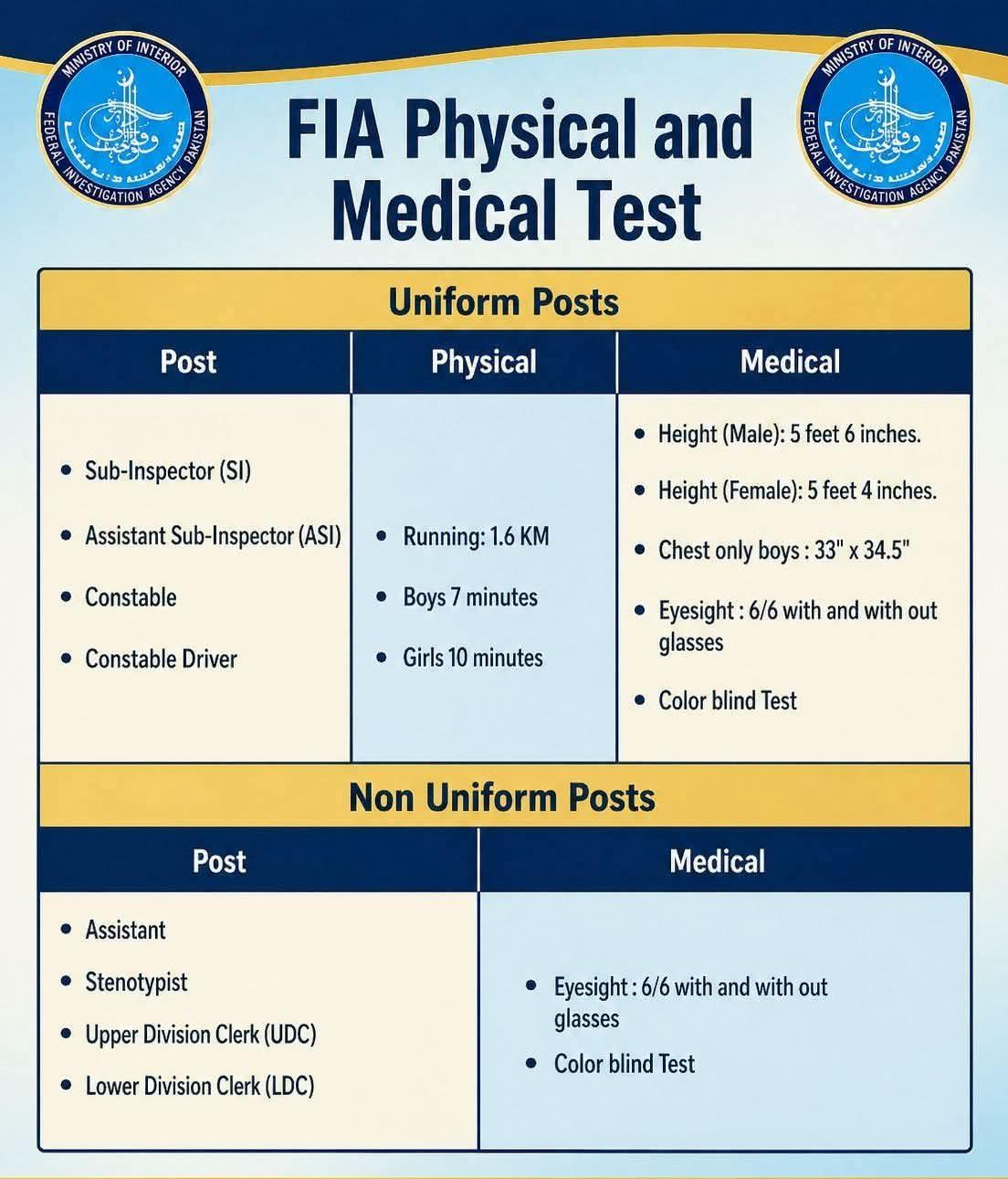
- Sub-Inspector (SI)
- Assistant Sub-Inspector (ASI)
- Constable
- Constable Driver
Physical Test Requirements for Uniform Posts
The physical test mainly evaluates running ability and stamina.
Running Test Details
Candidates must complete:
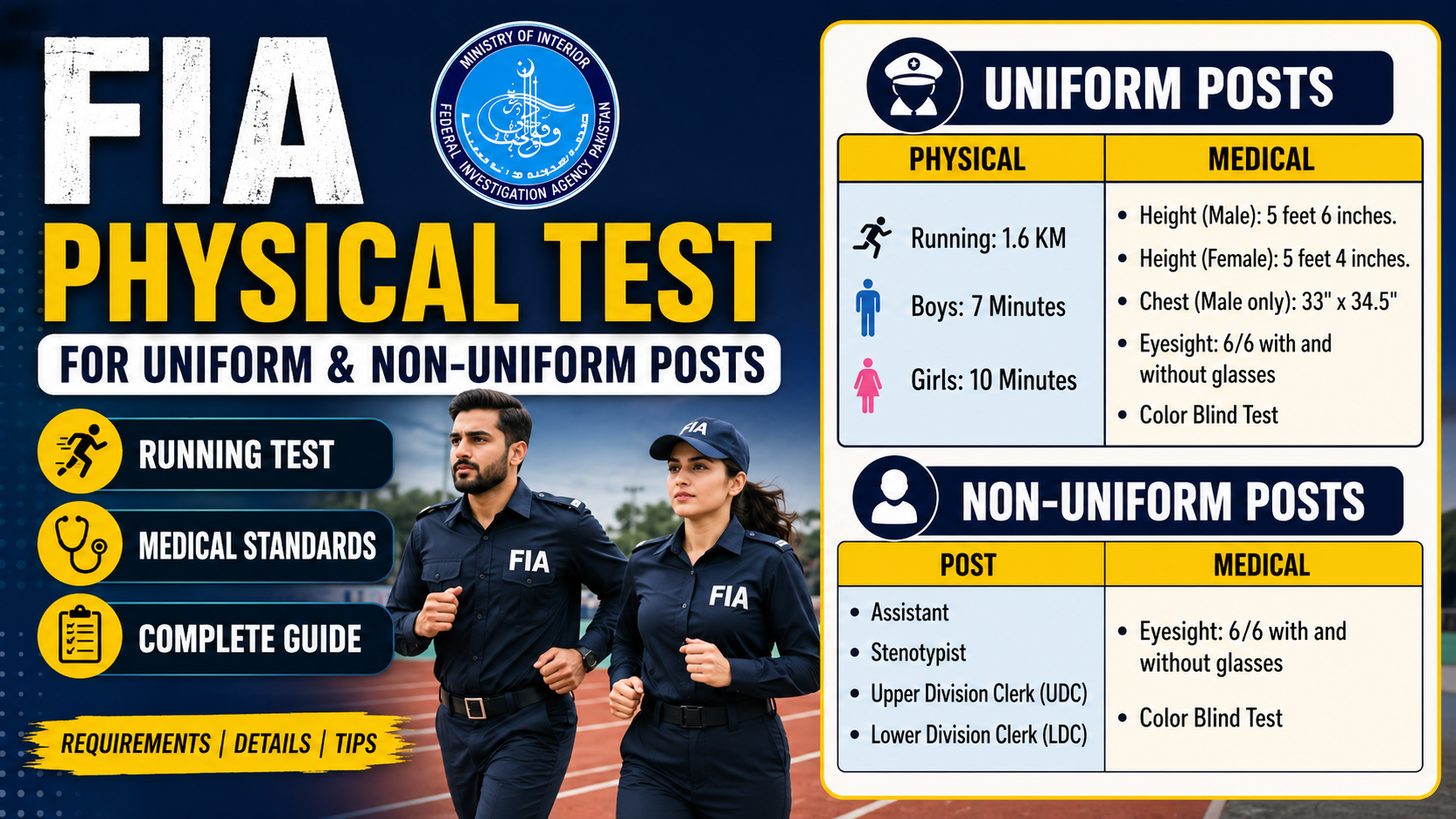
- Distance: 1.6 kilometers (1 mile)
- Time for Male Candidates: 7 minutes
- Time for Female Candidates: 10 minutes
This test ensures candidates have the endurance required for field duties.
Tips to Pass the Running Test
- Start jogging at least 4–6 weeks before the test
- Practice interval running to improve speed
- Maintain a balanced diet and hydration
- Wear proper running shoes to avoid injury
Consistency matters more than intensity when preparing.
Medical Requirements for Uniform Posts
Apart from physical fitness, candidates must meet strict medical standards.
Key Medical Criteria
- Height (Male): Minimum 5 feet 6 inches
- Height (Female): Minimum 5 feet 4 inches
- Chest (Male only): 33 inches (expanded to 34.5 inches)
- Eyesight: 6/6 vision (with or without glasses)
- Color Vision: Must pass the color blindness test
Why Medical Standards Matter
These requirements ensure that candidates are physically capable of handling:
- Field operations
- Emergency situations
- Long working hours under pressure
Non-Uniform Posts in FIA
Non-uniform positions are office-based and do not require physical endurance tests. However, candidates must still meet basic medical fitness standards.
Common Non-Uniform Positions
- Assistant
- Stenotypist
- Upper Division Clerk (UDC)
- Lower Division Clerk (LDC)
Medical Requirements for Non-Uniform Posts
Although there is no physical running test, candidates must pass a basic medical check.
Key Requirements
- Eyesight: 6/6 vision (with or without glasses)
- Color Vision: Must not be color blind
Also Read About: FIA Test Syllabus 2026 Constable, UDC, LDC, Assistant & ASI
These roles focus more on administrative efficiency rather than physical performance.
Differences Between Uniform and Non-Uniform Tests
Understanding the differences can help you prepare effectively.
1. Physical Test
- Uniform Posts: Mandatory running test
- Non-Uniform Posts: No physical test
2. Medical Standards
- Uniform Posts: Strict (height, chest, eyesight)
- Non-Uniform Posts: Basic (mainly eyesight and color vision)
3. Job Nature
- Uniform Posts: Fieldwork, investigations, enforcement
- Non-Uniform Posts: Office work, documentation, clerical tasks
Preparation Strategy for FIA Candidates
Whether you are applying for a uniform or non-uniform post, preparation is key.
For Uniform Post Applicants
- Build stamina with daily running
- Track your time for the 1.6 km run
- Maintain ideal body weight
- Get your eyesight tested early
For Non-Uniform Post Applicants
- Focus on written test preparation
- Ensure basic medical fitness
- Improve typing or clerical skills (if applicable)
Common Mistakes to Avoid
Many candidates fail due to avoidable mistakes. Watch out for:
- Ignoring physical preparation until the last moment
- Not checking height/chest requirements beforehand
- Poor time management during running test
- Skipping medical checkups before applying
Preparation should start early to avoid surprises.
Final Thoughts
The FIA recruitment process is designed to select fit, capable, and disciplined individuals. While uniform posts demand both physical and medical excellence, non-uniform roles focus more on administrative capabilities with basic health requirements.
If you’re aiming for a uniform position, prioritize fitness and endurance training. For non-uniform roles, focus on skills and knowledge while ensuring you meet the medical standards.
With the right preparation and mindset, you can confidently pass the FIA physical and medical tests and move one step closer to a rewarding career.